
CRAFTFLAT INSIGHTS
Starting a Short-Term Rental in Tokyo’s 23 Wards, 2026: Practical Guide to demand, licensing, local rules, and operations
1. How to evaluate Tokyo’s short-term rental market
Tokyo has exceptionally strong accommodation demand, but strong demand does not make every property viable. The result depends on location, the number of days that can legally be sold, guest capacity, cleaning logistics, noise control, operating costs, management structure, and the licence or notification route available for the building.
As of 15 July 2026, the Japan Tourism Agency reported 42,070 active notified residences under the Private Lodging Business Act nationwide. Registrations continue to increase, but many businesses have also closed. Registration volume alone is therefore not proof of profitability; demand, competition, regulation, and operating cost must be reviewed together.
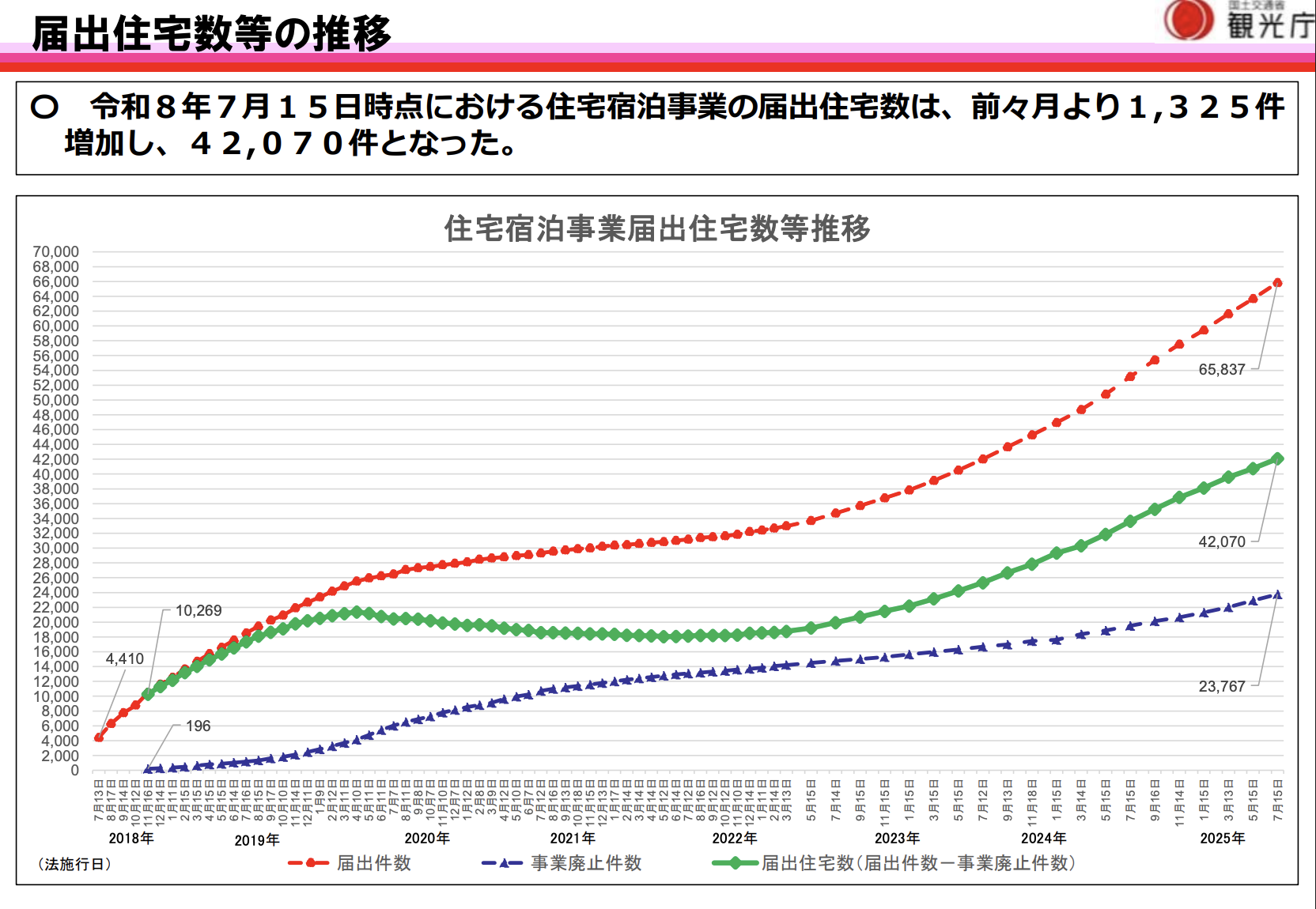
Source: Japan Tourism Agency: implementation status
2. Choose the correct legal route first
|
Route |
What it is |
Operating framework |
|
Private Lodging Business Act |
A notified residential accommodation business |
Up to 180 days nationally, with possible additional ward restrictions |
|
Hotel Business Act |
A licensed hotel, inn, or simple lodging business |
No 180-day cap, but stricter use, building, fire, hygiene, and management requirements |
|
Special-zone minpaku |
A certified scheme in designated strategic zones |
Only available in qualifying areas and subject to minimum-stay and local conditions |
A plan for year-round operation does not automatically qualify for a hotel-business licence. Before purchasing or leasing a property, consult the relevant health centre, building authority, fire department, architect, and licensing specialist, and include all required conversion work in the feasibility study.
3. Core rules under the Private Lodging Business Act
The national framework limits accommodation to 180 days in each reporting year, running from noon on 1 April to noon on the following 1 April. A qualifying residence must contain a kitchen, bathroom, toilet, and washbasin, and it must satisfy at least one statutory residential-use condition.
- An absentee-host property generally requires management by a registered private-lodging administrator.
- Operators must maintain a guest register, verify identity, complete passport checks where required, and file periodic reports.
- Safety measures, emergency lighting, evacuation signs, and fire equipment depend on the building and operating model.
- Condominium bylaws, ownership restrictions, and lease terms must expressly permit the intended use.
Source: Japan Tourism Agency: information for hosts
4. Tokyo rule changes to watch in 2026
Tokyo’s wards can impose restrictions beyond the national 180-day limit. Several wards introduced or implemented significant changes in 2026, so old online comparison charts and property advertisements should not be treated as reliable legal guidance.
|
Ward |
2026 planning point |
|
Private lodging is prohibited in exclusively residential zones from Monday noon to Friday noon; written notice to neighbours is required at least seven days before filing |
|
|
The amended ordinance was enacted in December 2025; area and period restrictions apply from 16 December 2026, including a 120-day annual window and restrictions on new facilities in roughly 70% of the ward |
|
|
A new ordinance and strengthened operating rules took effect on 1 April 2026; operators should review the current guidance on notice and management |
|
|
A new ordinance took effect on 1 July 2026, including limits on certain new management-company-operated facilities in residential zones |
|
|
Restricted zones and periods apply, although qualifying host-resident arrangements may be exempt; use the guidance updated in August 2026 |
5. Five area types worth evaluating
Shinjuku: connectivity and international demand
The ward attracts leisure and business demand, but competition, property cost, and neighbourhood-management pressure are high. Feasibility can change sharply between commercial and exclusively residential zones.
Ikebukuro and Toshima: broad demand and transport
The area can serve young travellers, families, and longer stays. Any new plan must account for the area and period restrictions scheduled to apply from December 2026.
Asakusa and Ueno: clear visitor appeal
Historic and cultural demand is easy to communicate, but the operating model and on-site management arrangements can materially affect the permitted schedule.
Oshiage and Kinshicho: tourism plus daily convenience
Airport and central-Tokyo connections are attractive, while Sumida’s strengthened 2026 framework makes practical, demonstrable management capacity especially important.
Kita, Higashi-Jujo, and Akabane: access and longer stays
These are not Tokyo’s central sightseeing districts, but transport, everyday convenience, and larger layouts can suit families and medium-term guests. Property-level compliance remains essential.
6. Characteristics of the other 18 wards
The characteristics of each district other than the five recommended districts are summarized in the table below. A ward should not be judged by tourism recognition alone. Airport and central-city access, daily convenience, target guests, property cost, and the local operating restriction must be evaluated together.
|
Ward |
Area profile and likely demand |
Planning consideration |
|
Chiyoda |
Tokyo Station, the Imperial Palace, Marunouchi, and Akihabara create exceptional business and visitor demand. |
High property cost and complex rules around educational and densely populated areas require early property-specific review. |
|
Chuo |
Ginza, Nihonbashi, Tsukiji, and Tsukishima support shopping, food, and business stays. |
Private-lodging days are tightly restricted, favouring premium weekends, holidays, or a different licensing route. |
|
Minato |
Roppongi, Azabu, Akasaka, and Odaiba attract international visitors and higher-spending guests. |
Restricted zones may operate mainly during school-holiday periods; confirm zoning and the exact restricted area. |
|
Bunkyo |
Universities, hospitals, Tokyo Dome, and gardens support family, academic, medical, and medium-term demand. |
Residential and educational zones are widely restricted. Test whether weekend-only economics are workable. |
|
Koto |
Toyosu, Ariake, Tokyo Big Sight, and nearby attractions generate event and family demand. |
Ward-wide day restrictions are strict. Event pricing and longer weekend stays become important. |
|
Shinagawa |
Business districts and strong Haneda access support corporate and pre-flight stays. |
Exclusively residential zones have day restrictions; investigate commercial and neighbourhood-commercial sites first. |
|
Meguro |
Nakameguro, Jiyugaoka, and the Meguro River suit lifestyle, food, and design-oriented stays. |
Large residential areas and strict day limits call for excellent noise control and a premium concept. |
|
Ota |
Haneda proximity supports early flights, late arrivals, business travel, and airport stopovers. |
Compare ordinary private lodging with special-zone minpaku, including minimum stay and management conditions. |
|
Setagaya |
Shimokitazawa, Sangenjaya, and Futako-Tamagawa suit local experiences, families, and longer stays. |
Residential zones are extensive. Larger houses need careful capacity, outdoor-use, and neighbour planning. |
|
Nakano |
Nakano Broadway, subculture, and proximity to Shinjuku appeal to overseas visitors. |
Check residential-zone restrictions and prioritise transport-rich commercial areas around major stations. |
|
Suginami |
Koenji, Asagaya, and Nishi-Ogikubo offer music, vintage shopping, and neighbourhood culture. |
Most of the ward is residential. Quiet, smaller-scale, longer stays may fit better than high-turnover tourism. |
|
Kita |
Akabane, Oji, Jujo, and Higashi-Jujo provide strong access and everyday convenience at a different cost level. |
The national 180-day cap and all fire, bylaw, management, and neighbour obligations still apply. |
|
Arakawa |
Nippori offers excellent Narita access and links to Yanaka and old-Tokyo neighbourhoods. |
Ward-wide operating-day restrictions are strict; model airport-related weekend stays conservatively. |
|
Itabashi |
Lower property cost, Ikebukuro access, and family-sized layouts can support longer stays. |
Tourism pull is weaker and residential restrictions apply. A hybrid with medium-term rental may be stronger. |
|
Nerima |
A calm residential environment can suit families, visiting relatives, and extended stays. |
Limited tourism demand and broad residential restrictions require a very specific target market. |
|
Adachi |
Kita-Senju’s multiple lines connect guests with Ueno, Asakusa, central Tokyo, and airport routes. |
Conditions vary by area and property. Inspect station distance, night-time surroundings, and arrival routes. |
|
Katsushika |
Shibamata, Aoto airport access, and Shin-Koiwa transport links offer distinct demand. |
Plan around the ordinance fully effective from April 2026, especially for absentee-host properties in residential zones. |
|
Edogawa |
Kasai and Nishi-Kasai suit families, Tokyo Disney Resort trips, and longer apartment-style stays. |
The July 2026 ordinance restricts some new residential-area operations; confirm filing date and transitional treatment. |
7. Check Tokyo regulations and practical responses
Each of Tokyo’s 23 wards may impose its own additional ordinance on top of the Private Lodging Business Act. Permitted days, locations, management arrangements, advance notice, and transitional treatment can therefore be more restrictive than the national framework. The table below is an August 2026 planning summary, not a substitute for an address-level ruling by the ward.
|
Ward |
Main restriction or issue to confirm |
Practical response |
|
Chiyoda |
Restrictions differ by management model, educational district, school proximity, and densely populated area; some remote-management combinations can be prohibited throughout the year. |
Consider host-resident or on-site management, favour commercial zones, and obtain an address-specific view before commitment. |
|
Chuo |
Operation is generally prohibited from Monday noon to Saturday noon throughout the ward, leaving weekends and holidays. |
Use premium weekend and holiday pricing, efficient cleaning, and minimum stays; investigate hotel licensing for year-round needs. |
|
Minato |
In designated residential and educational zones, operation is limited mainly to specified school-holiday periods. |
Select a non-restricted zone or build a seasonal model; confirm whether the intended host arrangement changes the treatment. |
|
Shinjuku |
Exclusively residential zones cannot operate Monday noon to Friday noon. Written neighbour notice is required at least seven days before filing. |
Prioritise commercial zones and prepare notice records, waste handling, and complaint response before opening. |
|
Bunkyo |
Residential, quasi-industrial, and educational districts are subject to weekday-focused period restrictions. |
Select an unrestricted location or qualifying operating model and test profitability on a restricted calendar. |
|
Taito |
Absentee-host and similar models face a ward-wide restriction from Monday noon to Saturday noon; treatment differs where qualifying on-site management exists. |
Test on-site management first and use Asakusa/Ueno’s longer-stay and premium visitor demand. |
|
Sumida |
Since April 2026, absentee or remote-management operations face weekday-focused restrictions; an on-site or immediately adjacent presence may qualify for different treatment. |
Document the manager’s location and response system, complete advance explanation, and use the current ward guidance. |
|
Koto |
Private lodging is generally prohibited ward-wide from Monday noon to Saturday noon, leaving weekends and public holidays. |
Specialise in events and holiday demand, with longer stays and pricing that reflects limited inventory days. |
|
Shinagawa |
Exclusively residential zones have weekday-focused restrictions; other zones generally remain subject to the national cap. |
Investigate commercial areas around Shinagawa, Osaki, and Gotanda and target airport and corporate demand. |
|
Meguro |
Designated areas face restrictions centred on Monday noon through Saturday noon, producing a weekend-led calendar. |
Prioritise commercial locations and use design quality, longer stays, and premium pricing to support returns. |
|
Ota |
Both ordinary private lodging and special-zone minpaku may be relevant; management and neighbourhood obligations have received greater attention in 2026. |
Compare ordinary notification, special-zone certification, and hotel licensing using minimum stay, operating days, and conversion cost. |
|
Setagaya |
Exclusively residential zones face weekday-focused restrictions and neighbourhood protection is important across broad residential areas. |
Prioritise station and commercial locations; strengthen rules for capacity, outdoor use, noise, and waste. |
|
Shibuya |
Residential and educational districts have specified restricted periods; qualifying resident-host or management arrangements may be exempt. |
Use the post-July 2026 guidance to confirm the address and management model; favour commercial locations and genuine rapid response. |
|
Nakano |
Exclusively residential zones face weekday-focused restrictions; other zones generally use the national cap. |
Target commercial areas around Nakano Station and clearly market subculture and Shinjuku access. |
|
Suginami |
Residential zones are largely restricted from Monday noon to Friday noon, and they cover much of the ward. |
Check zoning by lot and combine weekend, holiday-eve, longer-stay, or medium-term demand. |
|
Toshima |
From 16 December 2026, the operating window is limited to 120 days during spring, summer, and winter breaks; new operations are restricted in roughly 70% of the ward. |
Confirm the effective date, new-versus-existing status, and mapped zone; compare hotel licensing or another use early. |
|
Kita |
A blanket ward-level reduction of the national operating period is relatively limited, but all national and local procedural duties remain. |
Use access and cost advantages while carefully checking fire safety, use, bylaws, notice, and management. |
|
Arakawa |
Operation is restricted from Monday noon to Saturday noon across the ward regardless of zoning or host presence in the general case. |
Focus on Nippori airport demand and weekend longer stays and use conservative sellable-night assumptions. |
|
Itabashi |
Exclusively residential zones face weekday-focused restrictions; other zones generally retain the national cap. |
Prioritise station-adjacent commercial zones and combine family/group stays with medium-term demand. |
|
Nerima |
Exclusively residential zones face weekday-focused restrictions and make up a large share of the ward. |
Enter selectively and validate purpose-driven demand such as family visits or extended stays. |
|
Adachi |
Period restrictions apply in certain residential areas and treatment requires review of the exact location and management model. |
Concentrate on highly connected areas such as Kita-Senju and obtain an address-level confirmation from the ward. |
|
Katsushika |
From April 2026, absentee-host operations in exclusively residential zones are generally limited to weekends, holidays, and the year-end period, with stronger operating and signage duties. |
Compare resident-host, unrestricted-zone, and hotel-business options; use Aoto and Shin-Koiwa access and longer stays. |
|
Edogawa |
From July 2026, new management-company-operated lodging is restricted in exclusively residential and residential zones; host-managed models also face prior-residency conditions. Transitional rules apply. |
Confirm filing date, transition status, and management type; consider family and medium-term demand around Kasai and Nishi-Kasai. |
Summary current to August 2026. Always confirm the exact restricted area, permitted period, host-resident or absentee-host classification, on-site or rapid-response requirement, neighbour-notice radius, and transitional treatment in the current ward ordinance, rules, and guidance.
8. Build the financial model from legal sellable nights
A simple revenue model is average daily rate × legally sellable nights × occupancy. Do not calculate a Private Lodging Business Act property as though it can sell 365 nights. Deduct platform and payment fees, management, cleaning and linen, utilities, waste disposal, rent or debt service, building charges, taxes, insurance, repairs, emergency response, licensing, fire and building work, furnishing, photography, and launch costs.
|
Operating insight: Optimise profit per booking, not occupancy alone. Longer stays, an appropriate minimum stay, seasonal pricing, and clear cancellation terms can reduce turnover cost and operational strain. |
9. Practical pre-opening sequence
1. Select a provisional legal route
Decide whether the project is being tested as notified private lodging, licensed accommodation, or special-zone minpaku.
2. Complete property due diligence
Check zoning, building use, completion records, fire requirements, bylaws, lease permission, access, and evacuation routes.
3. Consult authorities before commitment
Speak with the health centre, building authority, and fire department before purchase, lease, or major design work.
4. Confirm the model and conversion budget
Use permitted days, realistic capacity, construction cost, furnishing, and operating expenses in multiple scenarios.
5. Complete neighbourhood notice and filing
Follow the ward-specific timing, radius, delivery method, and record-keeping rules.
6. Create operating procedures
Document cleaning, 24-hour contact, identity checks, access, noise, waste, emergencies, and periodic reporting.
10. Amenities that support strong, sustainable reviews
- Blackout curtains, quality bedding, and convenient charging points
- Fast Wi-Fi and a genuinely usable workspace
- Laundry and drying facilities, storage, and practical cookware for longer stays
- Multilingual evacuation information, house rules, and equipment guides
- Privacy-conscious smart access and noise-monitoring systems
- Safe, intuitive circulation for families, older travellers, and guests with luggage
Conclusion
Tokyo continues to offer substantial short-term accommodation demand, but 2026 has also brought tighter local rules and stronger enforcement. The central question is not simply which area is popular. It is how many nights and guests the specific property may legally accommodate, what work is required, and whether a reliable management and neighbourhood-response system can be maintained.
CraftFlat supports property-led feasibility, space planning, renovation, furnishing, and the practical setup of accommodation or medium-term rental operations. A property-specific review begins once the address, plans, building documents, intended capacity, amenities, and preferred operating model are known.
Important: This article is general information, not legal, tax, licensing, or investment advice. Rules must be checked for the specific property, including zoning, building and fire requirements, condominium bylaws, lease terms, and ward ordinances.
Have a property? We have a solution https://craftflat.com/contact/